

Is a Walking Pad Worth It for Your Home Office?
Last Updated: November 21, 2026
Quick Summary
A walking pad is worth it for a home office if you want to turn dead sitting time into low-impact movement without a gym trip, but only if your desk rises to standing height and you match tasks to slow speeds. Start with 20-30 minute sessions and build to 60-90 minutes total per day, and budget for a standing desk or riser plus an anti-fatigue mat.
- Slow walking at 1.5-2.5 km/h suits reading and reviewing best.
- Email and video calls with camera off work at 2-3 km/h in short bursts.
- Build from 15 minutes daily in week one to 60-90 minutes total by week four.
- A fixed desk makes the pad unusable, so a standing desk or riser is often required.
- An anti-fatigue mat is a small add-on that cuts vibration and noise.
Table of Contents
- Desk Walking Pad Pros and Cons for Home Office Workers
- Can You Work While Walking on a Walking Pad?
- How Long to Walk on a Walking Pad Without Losing Focus
- Frequently Asked Questions
Desk Walking Pad Pros and Cons for Home Office Workers
A walking pad converts dead sitting time into low-impact movement without a gym trip, though the risk is it becomes a clothes rack within a month. Pros: daily movement, low impact, compact storage, no membership.
Weighing a walking pad against other compact options? Our guide to the best compact fitness equipment for apartments covers what actually fits, and read our advice on how to choose an ergonomic office chair for back support before you commit. Our breakdown of whether expensive fitness gear is worth it helps you judge the spend against real long-term use.
Can You Work While Walking on a Walking Pad?
Yes, but only for certain tasks at certain speeds: slow walking suits reading, email, and calls, while fast walking does not suit precision typing.
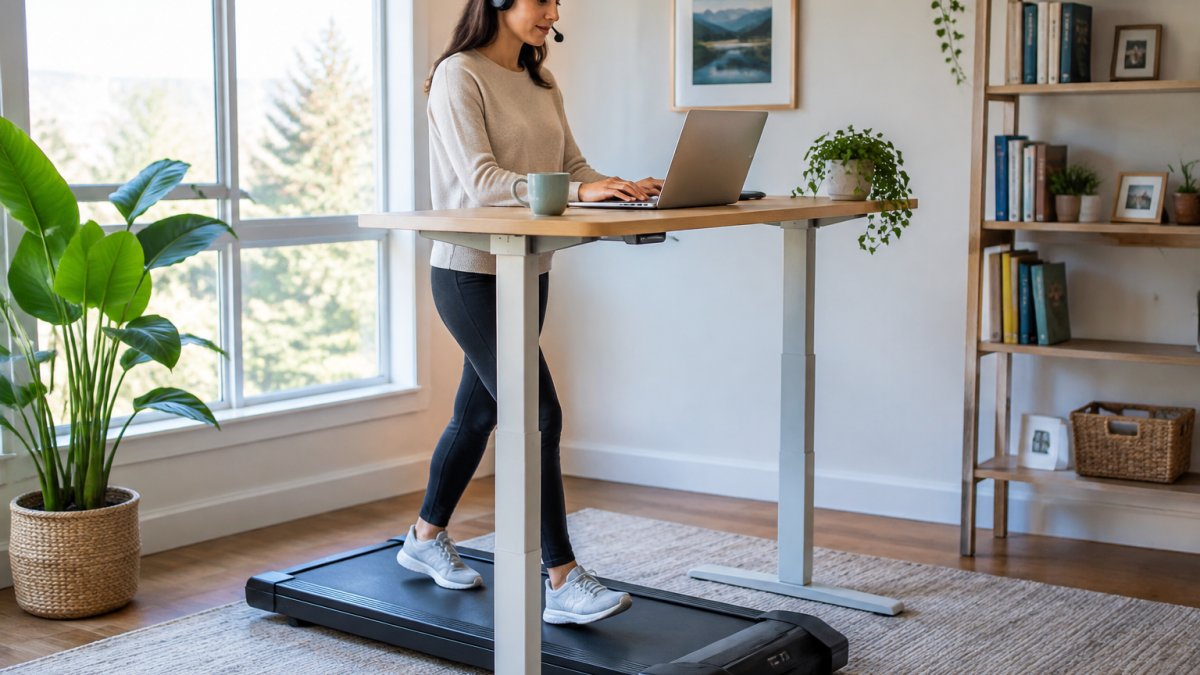
Work-task and speed matching decides this. Match the task to the pace:
| Task | Comfortable Speed | Notes |
|---|---|---|
| Reading and reviewing | 1.5-2.5 km/h | Easiest to sustain |
| Email and messaging | 2-3 km/h | Short bursts work best |
| Video calls, camera off | 2-3 km/h | Mute when footfall is loud |
Comfortable Speed
The practical rule: if the task needs fine mouse control, slow down or step off. Ergonomics matter too, elbows near 90 degrees, wrists flat, and your desk must rise with the pad. Our guide to fixing poor posture explains the setup changes that make walking while working sustainable.
How Long to Walk on a Walking Pad Without Losing Focus
Start with 20-30 minutes per session and build to 60-90 minutes total per day, split into blocks. A walking pad works best as a movement habit rather than a workout. A realistic plan: Week 1, 15 minutes daily at 2 km/h; Week 2, two 15-minute blocks; Week 3, 20-25 minutes per block; Week 4 onward, 60-90 minutes total. Stop and step off when typing errors climb or attention drifts.
Our home self care tips for busy professionals show how to fit short reset routines into a packed workday.
Total cost of ownership is the angle most buyers skip. A walking pad is not just the purchase price:
| Cost Item | What to Budget For | Why It Matters |
|---|---|---|
| Purchase price | Varies by brand and build | |
| Standing desk or riser | Often required | A fixed desk makes the pad unusable |
| Anti-fatigue mat | Small add-on | Cuts vibration and noise |
Add those up before you decide, the pad is often the cheapest part of making it work.
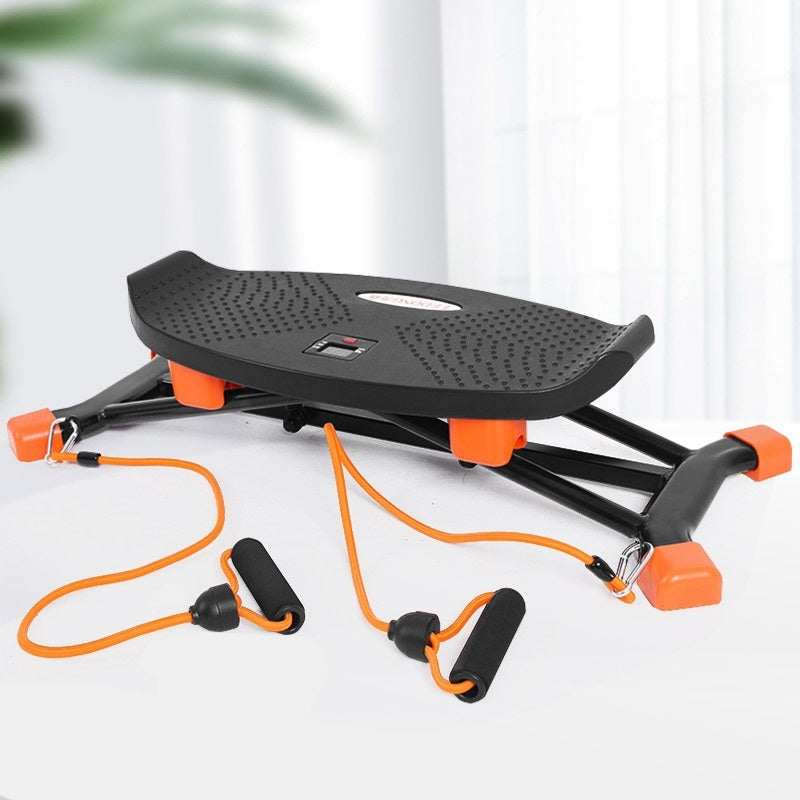
For a low-impact cardio option, our Mini Fitness Skiing Machine for Home Exercise is a compact alternative at 132.99, with a 100kg maximum load and elastic hand straps.
Noise deserves its own check before you use a pad in a meeting. Watch out: buying a pad before checking your desk height, if your desk tops out below standing height for your body, you will end up hunched, worsening existing neck and shoulder tension.
The real test of a walking pad is not the first week, it is the fourth. If you want movement that fits a small space and does not depend on a desk setup, FitGlow Fitness Gear stocks compact home equipment built for exactly that, including low-impact cardio tools with space-saving construction and everyday fitness in mind. Get started with FitGlow Fitness Gear and build movement into the hours you already work.
Frequently Asked Questions
Are desk walking pads worth it for a home office?
They are worth it if your main problem is sitting all day and you want low-impact movement without leaving the house. A walking pad lets you add steps during calls or admin work, and it stores under a desk or bed. They are less useful if your job needs deep concentration for hours, or if you live above neighbours who are sensitive to motor hum. Weigh the desk walking pad pros and cons against your actual workday before buying.
Can you actually work while using a walking pad?
Yes, but not at every task. Typing and reading are manageable at slow speeds, roughly 2 to 3 km/h, once you adjust. Video calls work if the motor is quiet and your camera is stable. Complex writing, spreadsheets with fine detail, and fast-paced calls are harder. Many people split the day: walk during email and meetings, sit for focused work.
How long should you walk on a walking pad while working?
Start with 15 to 20 minute blocks and build up. Most people find 30 to 60 minutes total across a workday is sustainable, split into two or three sessions rather than one long stretch. Stop if your calves tighten or your typing accuracy drops. Consistency matters more than duration, and short daily sessions beat one long walk you dread.
