

Effective Home Self Care Tips for Busy Professionals
Table of Contents
- Self-Care Activities at Home That Actually Fit Your Day
- Build a Daily Self-Care Routine in 10-15 Minutes
- Inexpensive Self-Care Ideas and Self-Care for Stress Relief
- Frequently Asked Questions
Last Updated: October 21, 2026
Self-Care Activities at Home That Actually Fit Your Day
Effective home self care tips start with one honest question: what can you actually repeat on a Tuesday when you're tired?
The strongest home self care activities take under 15 minutes, need almost no setup, and address something you can feel.
Movement and mobility. A short stretch or resistance band session targets the tension that builds during desk work. The NHS physical activity guidelines recommend adults aim for regular movement across the week, and short home sessions count toward that total.
Sleep and rest. A consistent sleep schedule matters more than a perfect one, supporting mood, focus and stress tolerance.
Stress reduction. Breathing exercises, journaling and mindfulness meditation give your nervous system a deliberate downshift, ten minutes is enough.
Nutrition and hydration. Keeping fruit, vegetables and a filled water bottle visible removes the decision step.
Social connection. A short call with a friend counts as self care, relationships are part of emotional well-being, not a bonus.
Build a Daily Self-Care Routine in 10-15 Minutes
The fastest way to build a daily self-care routine is to anchor three short practices to things you already do: waking up, finishing work, and going to bed.
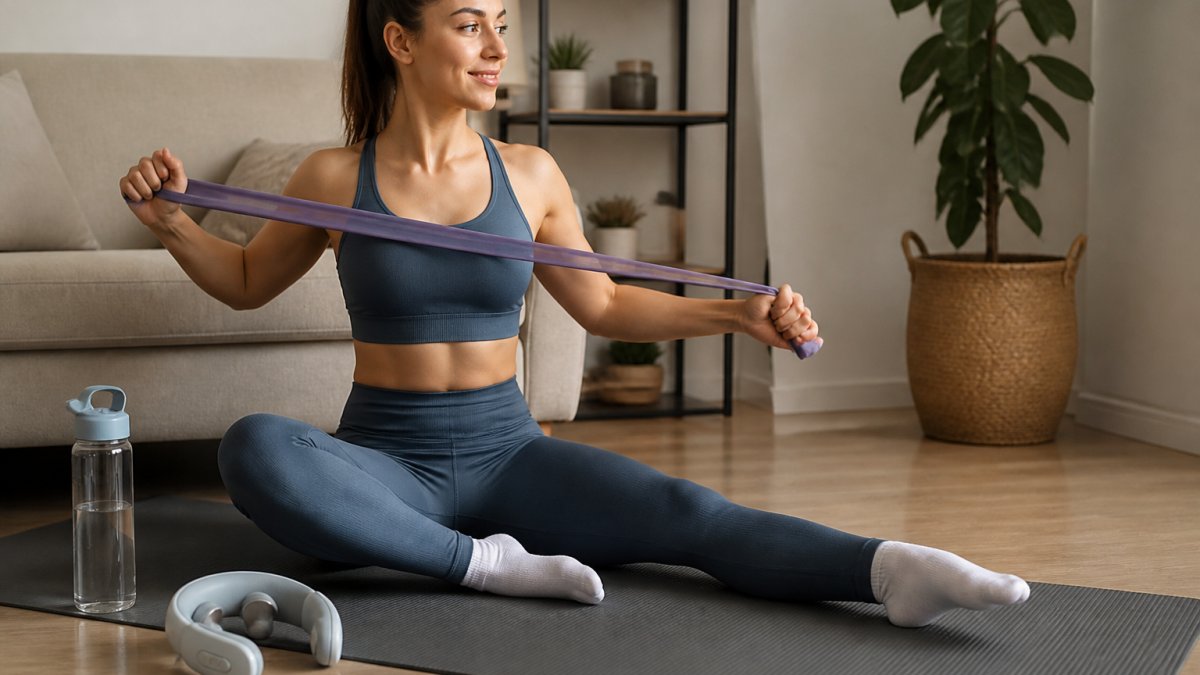
Here's the sequence for anyone starting from zero, about 12 minutes total.
- Morning (3 minutes): Band stretching and slow breathing before you open your laptop.
- Midday (2 minutes): Stand, roll your shoulders, drink a full glass of water.
- After work (5 minutes): Heat or massage on whatever feels tight, a neck and shoulder massager removes the effort barrier.
- Before bed (3 minutes): Journaling or a wind-down stretch. Screens off.
Don't treat this as a fitness program. A daily self care routine is a maintenance habit, and maintenance habits survive on being easy.

| Time slot | Activity | Duration | What it addresses |
|---|---|---|---|
| Morning | Band stretch and breathing | 3 min | Mobility, stress |
| Midday | Stand, stretch, hydrate | 2 min | Posture, hydration |
| After work | Heat or massage | 5 min | Muscle tension, recovery |
| Before bed | Journal or gentle stretch | 3 min | Sleep, emotional well-being |
Inexpensive Self-Care Ideas and Self-Care for Stress Relief
Inexpensive self-care ideas work because cost has almost nothing to do with effectiveness. Walking, stretching, journaling, breathing exercises and a hot shower are free or nearly so. Self-care for stress relief comes down to practices that lower arousal rather than add stimulation.
Natural Rubber Non-Slip Yoga Mat for Yoga and Meditation →
A few low-cost options worth building in:
- Walking outdoors. Free, and movement plus nature supports physical and mental health.
- Journaling. Writing feelings down externalizes them, making them easier to examine.
- A consistent sleep schedule. Costs nothing and does more for stress tolerance than most paid interventions.
- Stretching with a band. One inexpensive tool covers mobility, flexibility and recovery.
- Heat and cold comfort tools. Targeted warmth for tension, cooling for head and facial pressure.
Where a small purchase genuinely helps is when it removes friction. Our Natural Rubber Non-Slip Yoga Mat for Yoga and Meditation gives you a defined surface for yoga, meditation and floor stretching, with asana guide lines and a stable 5mm base.


For desk-related tension, our Intelligent Cervical & Shoulder Massager with Heat and 3 Massage Modes combines a 42°C heating function with three modes and 15 intensity levels; its 15-minute auto shut-off matches a realistic self care session.
For a mobility tool that doubles as a warm-up aid, the Yoga Stretch Band for Flexibility, Stretching and Mobility is a low-cost entry point.
For screen-heavy days, the Smart Hot Compress Eye Massager provides gentle warmth and massage around the eye area.
How do you know if your self-care routine is helping?
You know a self-care routine is helping when you can point to specific changes: falling asleep faster, less end-of-day tension, steadier mood, or fewer headaches after screen time. Track one or two markers for two weeks; if nothing shifts, change the activity rather than adding more.
When is self-care not enough?
Self care is not a substitute for professional care. If low mood, anxiety, persistent pain or sleep problems continue despite consistent routines, speak to a doctor or qualified professional.
Frequently Asked Questions
How much time should I spend on self-care each day?
Ten to fifteen minutes is a realistic starting point for most busy professionals, and it is easier to keep than a longer block you skip. Split it into three short parts: a few minutes of movement or stretching, a few minutes of quiet breathing or journaling, and a few minutes of something you enjoy. Consistency matters more than duration. Once the short version feels automatic, add five minutes rather than overhauling the whole routine.
What are some effective self-care activities to do at home?
Pick activities that match what you actually need that day. For physical tension, try stretching with a yoga stretch band or a short walk. For stress relief, try slow breathing, journaling, or a warm compress on tight shoulders. For rest, protect a consistent sleep schedule. For connection, call someone rather than scroll. The Natural Rubber Non-Slip Yoga Mat at 28.99 dollars gives you a defined surface for yoga and meditation in a small space.
What are inexpensive ways to practice self-care at home?
Most effective self-care costs nothing: walking, stretching, breathing exercises, journaling, drinking enough water, and keeping a regular sleep schedule. Where a tool helps, buy one that solves a specific problem. The Migraine Relief Hat is 20.99 dollars for cold compression, and the Portable Muscle Relaxation Massage Gun is 38.99 dollars with more than five speed settings and four interchangeable heads. Choose one item, use it daily for a month, then decide whether to add another.
Busy professionals don't need more self care advice. They need a routine short enough to survive a bad week. FitGlow Fitness Gear builds gear for exactly that: compact equipment for home use, recovery tools designed around 15-minute sessions, and wellness essentials that make the daily habit easier to start. Browse the Shop All collection and build a routine you'll still be doing next month.