

Is Expensive Fitness Gear Worth It? 2026 Guide
Table of Contents
- When Expensive Fitness Gear Actually Delivers Value
- Premium vs Budget Home Gym Equipment: What Changes
- Best Home Gym Equipment for the Money
- Total Cost of Ownership: The Real Investment
- Buying Used Gym Equipment: Pros and Cons
- Home Gym Equipment Warranty and Support
- Who Should Spend More on Fitness Equipment
- Frequently Asked Questions
Last Updated: October 11, 2026
When Expensive Fitness Gear Actually Delivers Value
Is expensive fitness gear worth it? The answer depends entirely on how you train, how often you use equipment, and what happens when something breaks. At FitGlow Fitness Gear, we understand the real difference between budget and premium equipment over time. Some people save money by going cheap. Others waste thousands on premium gear they abandon after three months. The distinction isn't about price, it's about durability, safety, and whether the equipment matches your actual training frequency.
Premium fitness equipment typically costs 2-3 times more than budget alternatives. But that upfront cost doesn't tell the whole story. What matters is what happens after year one, year three, and year five. When you calculate total cost of ownership, expensive gear often costs less per use than the budget option you replaced twice.
Below, we'll show you exactly when premium fitness equipment justifies the investment, which budget options actually hold up, and how to avoid wasting money on either extreme.
Premium vs Budget Home Gym Equipment: What Changes
The gap between premium and budget fitness equipment shows up in three specific places: how long it lasts, whether it's safe under load, and how it feels to use day after day.
Build Quality and Durability
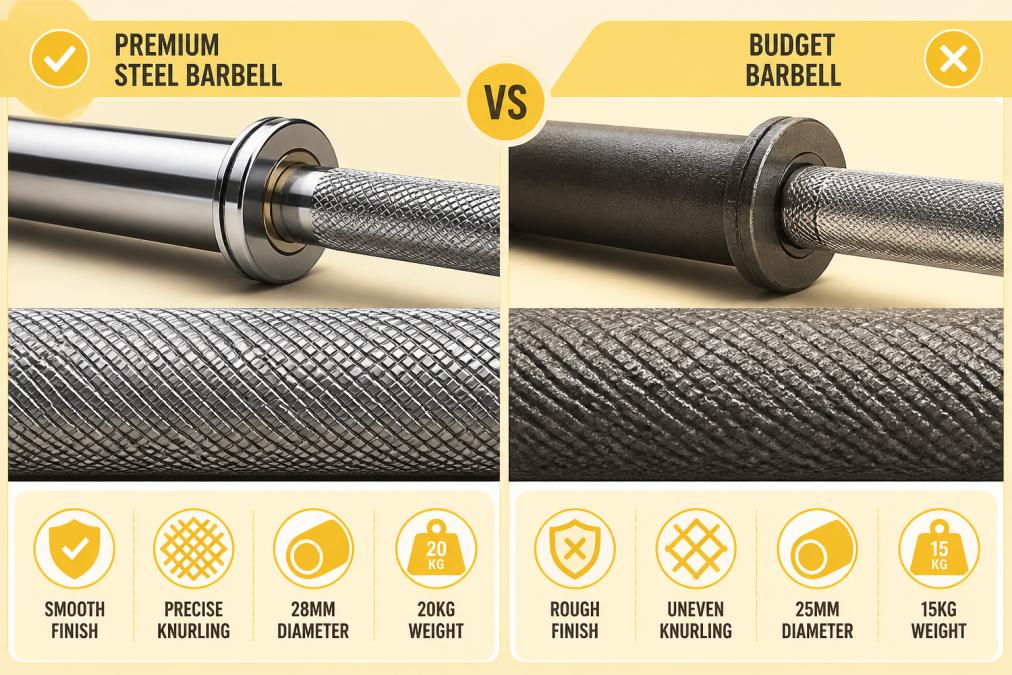
Premium equipment uses thicker steel gauges, better welds, and materials engineered for thousands of repetitions. Budget equipment cuts costs by using thinner materials and faster manufacturing processes. The difference becomes obvious within months.
A premium adjustable dumbbell set like the Multifunctional Fitness Strength Equipment 2kg-220kg uses iron and ABS construction. The premium version costs more upfront but maintains its grip texture and structural integrity after years of workouts.

Safety and Weight Capacity
Budget equipment often lists a maximum weight capacity that it technically won't break at, but the experience deteriorates well before that limit. Handles become slippery. Joints loosen. The equipment feels unstable.
Premium equipment maintains consistent performance across its entire rated capacity. The Mini Fitness Skiing Machine for Home Exercise, for example, supports up to 100kg with elastic hand straps. The materials don't degrade under load the way cheaper alternatives do.

Safety matters more than comfort. An unstable piece of equipment can cause injury. A wobbly bench or slipping handle isn't just annoying, it's a liability during a heavy lift or intense cardio session.
Long-Term Performance and Maintenance
Premium equipment requires less maintenance. The finishes don't rust as quickly. Moving parts stay smooth. When something does wear out, replacement parts are available and reasonably priced.
Best Home Gym Equipment for the Money
Not every expensive option is worth it. Some premium equipment is overpriced for what it delivers. Some budget equipment is genuinely solid. The key is matching the equipment category to your actual training needs.
Strength Training on a Realistic Budget
If you're doing resistance training at home, adjustable equipment beats fixed-weight options for versatility and space. The Multifunctional Fitness Strength Equipment 2kg-220kg at $49.99 offers adjustable resistance from 2-20kg in a compact design. For beginners and intermediate trainers, this delivers everything you need without the space demands of a full dumbbell rack.
Where budget equipment shines: resistance bands and bodyweight tools. A quality set of resistance bands can last for years. The Muscle Recovery & Fitness Bundle at $135.99 includes three loop resistance bands, upper body bands, core discs, and massage tools, everything needed for a complete strength and recovery routine. This bundle approach gives you multiple tools in one purchase rather than buying each item separately.
Where premium pays off: squat racks and benches. These see constant load-bearing use. If you're doing heavy compound lifts, the safety difference justifies premium pricing.
Recovery Tools That Justify Premium Pricing
Recovery equipment shows the clearest cost-per-use advantage for premium options. A quality foam roller maintains its density for 2-3 years.
The Muscle Recovery & Fitness Bundle includes a deep tissue roller stick, silicone trigger point ball, and mini foam roller, all the tools needed for post-workout recovery. These items get used daily if you're training consistently. Over time, durability compounds into serious savings.
Cardio Equipment: Compact and Cost-Effective
Home cardio equipment is one category where budget options can work. The Mini Fitness Skiing Machine for Home Exercise at $132.99 delivers low-impact cardio in a space-saving design. At 77 × 32 × 17 cm, it fits in a small apartment without dominating the room.
The key question: will you actually use it? Expensive cardio equipment that sits unused is the worst investment. A compact, affordable option you'll consistently use beats premium equipment gathering dust.
Total Cost of Ownership: The Real Investment
Comparing fitness gear based on upfront price misses the actual financial picture. Total cost of ownership includes the initial purchase, maintenance, repairs, and replacement timeline.
Upfront Cost vs Long-Term Savings
Over three years, if a budget set needs replacement twice and a premium set doesn't, the premium option could cost slightly more but require one purchase instead of three.
This math changes dramatically for equipment you use frequently. Daily-use items compound the durability advantage. Weekly-use items show less difference. Monthly-use items might not justify premium pricing at all.
Break-Even Analysis for Home Gym Ownership
Calculate when a home gym pays for itself by comparing it to gym membership costs. After consistent use, a home gym can pay for itself, and after that, every month can save money.
This assumes you actually use the equipment. The break-even point extends dramatically if the gear sits unused. Premium equipment doesn't help if it's not being used. Budget equipment that you consistently use beats premium equipment that collects dust.
Buying Used Gym Equipment: Pros and Cons
The secondhand market for fitness equipment is substantial. People buy equipment with enthusiasm, use it for two months, then sell it. This creates opportunities for budget-conscious buyers.
Multifunctional Fitness Strength Equipment 2kg-220kg for Home Workouts →
When Used Equipment Makes Sense
Used equipment makes sense for items that don't wear out: dumbbells, kettlebells, weight plates, and yoga mats. These items have no moving parts and minimal wear patterns.
Used cardio equipment, resistance machines, and anything with electronic components carries risk. You can't test the full lifespan before buying. The previous owner might have abused it or maintained it poorly.
Red Flags and Safety Concerns
Inspect used equipment carefully. Look for rust on metal parts, cracks in plastic components, and signs of damage from improper storage. Test moving parts, do they move smoothly or catch?
For equipment with weight capacity ratings, verify the condition matches the demands you'll place on it. A used bench that's been through 5,000 sessions might be near the end of its safe lifespan. A used bench that's seen light use might have years remaining.
Never buy used equipment without testing it first. The savings aren't worth an injury from failed equipment.
Home Gym Equipment Warranty and Support
Warranty length and availability of replacement parts separate equipment makers who stand behind their products from those who don't.
What Warranty Coverage Actually Protects
A 1-year warranty covers manufacturing defects. A 3-5 year warranty suggests the manufacturer expects the equipment to last that long. Longer warranties indicate confidence in durability.
Read the fine print. Some warranties cover only defects, not wear and tear. Others cover damage from normal use. The best warranties are straightforward: if it breaks during normal use within the warranty period, the manufacturer replaces it.
Repairability and Replacement Parts
The real test of product support is whether replacement parts are available years after purchase. Can you buy a new handle for a piece of equipment? New straps? New padding?
This difference becomes critical when a replacement part could extend the life of a piece of equipment.
| Equipment Type | Premium Warranty | Budget Warranty | Replacement Parts Availability |
|---|---|---|---|
| Resistance bands | 3-5 years | 90 days | Readily available |
| Adjustable dumbbells | 5 years | 1 year | Full parts catalog |
| Cardio machines | 3-5 years | 90 days | Extensive |
| Yoga mats | 1-2 years | 30 days | Not needed |
Who Should Spend More on Fitness Equipment
Premium fitness gear makes sense for specific situations. Understanding your situation determines whether the extra cost is justified.
High-Frequency Trainers and Serious Athletes
If you're training 5-6 days per week, premium equipment pays for itself quickly. The durability advantage compounds with use frequency. An athlete using equipment 300 days per year will see the quality difference within months.
Serious athletes benefit from equipment that maintains performance under heavy loads. The consistency matters. A slight wobble or instability that's annoying during a light workout becomes dangerous during a maximal lift.
Recovery-Focused and Desk Workers
People spending 8+ hours daily at a desk often experience neck, shoulder, and lower back tension. Recovery tools become daily necessities, not occasional luxuries. For daily-use items, the durability advantage of premium equipment justifies the cost.
The Muscle Recovery & Fitness Bundle includes trigger point tools and massage rollers specifically designed for targeting tight areas from desk work. These tools see daily use, making durability a priority.

Budget-Conscious Beginners
Beginners should start with budget equipment. You don't know yet whether you'll stick with home training. A $50 investment in basic equipment is a low-risk way to test your commitment. After three months of consistent use, upgrade to premium equipment if you're still training.
This approach avoids the common trap of buying expensive equipment, using it for one month, then abandoning it. Test the habit first. Invest in quality later.
The real question isn't whether expensive fitness gear is worth it, it's whether the specific equipment matches your training frequency, your training intensity, and your commitment level. Premium equipment justifies its cost when you use it consistently, when safety matters, and when durability compounds into real savings over years of training. Budget equipment works fine for beginners, for occasional use, and for static items like weights and mats.
At FitGlow Fitness Gear, we recommend starting with versatile, durable equipment that supports multiple training styles. The Muscle Recovery & Fitness Bundle at $135.99 combines resistance training, recovery, and flexibility tools in one collection, giving you professional-grade equipment without the premium price tag for each individual item. For cardio, the Mini Fitness Skiing Machine at $132.99 delivers low-impact workouts in a space-saving design. These tools are built to last, backed by solid warranties, and designed for the daily demands of serious home training.
Frequently Asked Questions
Is expensive fitness gear worth the investment for home workouts?
Expensive fitness gear delivers value when it matches your training frequency and goals. Premium equipment can offer durability and consistent performance. For someone training frequently, premium gear can pay for itself through durability and consistent performance. Occasional exercisers may find budget options adequate if used correctly and stored properly.
What's the difference between premium vs budget home gym equipment?
Premium equipment uses higher-grade materials (steel gauge, reinforced joints), higher weight capacities, and better safety margins. Budget gear works for lighter use but may have lower weight limits and less stable construction. Premium items often include better warranties and replacement parts availability. The Muscle Recovery & Fitness Bundle at $135.99 offers multiple recovery tools in one investment, combining value with versatility for regular users.
Should I buy used gym equipment to save money?
Used equipment can save upfront, but check for rust, cracks, bent frames, and worn joints before buying. Verify weight capacity hasn't been exceeded and ask about original warranty status. Skip used items if you can't inspect them in person. New equipment from reputable brands includes warranty protection and guaranteed safety standards, which used items typically lack.
What home gym equipment warranty should I look for?
Look for warranties covering structural defects (frames, welds) and moving parts (handles, straps). Check if warranty covers normal wear or only manufacturing defects. Reputable brands provide replacement parts availability and repair support. Premium brands typically offer longer coverage and easier claims processes than budget alternatives, reducing long-term replacement costs.