

How to Use an EMS Trainer for Muscle Toning: 7 Steps
Last Updated: November 2, 2026
Quick Summary
To use an ems trainer for muscle toning, set up the pads on clean, dry skin exactly as the manual shows, start at a low intensity, and raise it slowly. Keep sessions short and regular, allow recovery between them, and stop at once if you feel pain or dizziness.
- Read the manufacturer's instructions fully before your first session.
- Clean and dry the skin, and place pads exactly as shown.
- Start at a low intensity and raise it slowly over several sessions.
- A steady contraction without pain is a good range; sting means lower the level.
- Do not use EMS with a pacemaker, during pregnancy, or with a heart condition unless a doctor approves.
Table of Contents
- EMS Training for Beginners: Setup Before Your First Session
- EMS Intensity Settings for Muscle Toning
- EMS Training Frequency and Session Length, plus Safety Precautions
- Frequently Asked Questions
EMS Training for Beginners: Setup Before Your First Session
EMS, or electrical muscle stimulation, sends small electrical pulses through pads on the skin to make muscles contract (Electrical Muscle Stimulation (EMS)). A simple, careful setup before your first EMS trainer session helps you start safely.
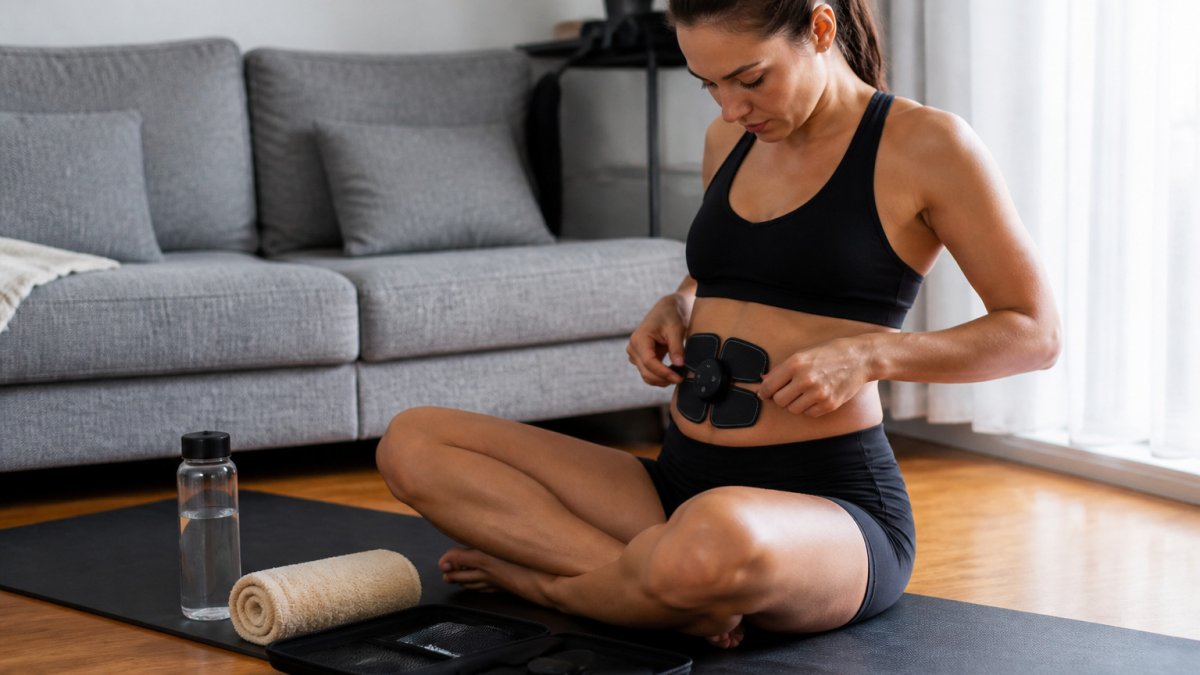
Read the manufacturer's instructions fully, clean and dry the skin, place pads exactly as shown, and keep the device, cables, and water well apart.
Watch out: Pads over broken skin or the front of the neck can cause irritation or worse.
The Intelligent Abdominal Muscle Device EMS Trainer is a compact 760g device for abdominal training at home, in the office, or on the move.

EMS Intensity Settings for Muscle Toning
Intensity is where most beginners go wrong, often starting too high. Start low and raise the level slowly over several sessions.
A steady contraction without pain means you are in a good range; if stimulation stings, lower the level right away.
Intelligent Abdominal Muscle Device EMS Trainer for Fitness →
Always follow the manufacturer's settings for your device.
EMS Training Frequency and Session Length, plus Safety Precautions
Shorter, regular sessions usually work better than long, intense ones. Use the frequency and time limits in your device manual and give muscles time to recover.
Muscle soreness after a session is common; light movement, water, and rest help. For more, read How to Relieve Muscle Soreness at Home: 7 Steps and Can You Really Recover in 10 Minutes as a Busy Professional?.
Watch out: Do not use EMS if you have a pacemaker, are pregnant, or have a heart condition, unless a doctor has approved it. Stop immediately if you feel chest pain, dizziness, or unusual discomfort. Prioritizing safety during electrical stimulation sessions ensures that your body remains responsive to training, a principle that also applies when using recovery boots to manage muscle fatigue after intense workouts.
| Step | What to Check | How Often |
|---|---|---|
| Setup | Clean, dry skin and correct pad placement | Every session |
| Intensity | Steady, comfortable contraction | Raise slowly over weeks |
| Session length | Within the manual's time limit | Follow the manual |
| Recovery | Rest days and light movement | Between sessions |
| Safety | Warning signs and medical limits | Always |
For more details, the [NHS guidance on electrical muscle stimulation | nhs.uk] and the [US FDA device information on electrical stimulators | fda.gov] are useful starting points.
Frequently Asked Questions
How often should you use an EMS muscle stimulator?
Most beginners start with two to three sessions per week and leave at least one rest day between sessions so muscles can recover. Because the research available here does not establish a single correct schedule, follow the manufacturer's instructions for the Intelligent Abdominal Muscle Device, and increase frequency gradually only if your muscles feel recovered and you are not experiencing soreness that lasts more than a day or two. Consistency across several weeks matters more than doing more sessions in one week.
How long should an EMS training session last?
Sessions are usually kept short, and the device's guidance should set the exact duration and cycle timing. Start at the shorter end of the recommended range for your first few sessions. Never extend a session beyond the manufacturer's stated duration to chase faster results, and stop early if you feel unusual discomfort, dizziness or pain.
What safety precautions should you take when using an EMS trainer?
Read the manufacturer's instructions before first use and follow the recommended settings and duration. Keep the skin clean and dry, avoid placing the device over broken skin, and do not use it on areas where you have implants, pacemakers or a pregnancy-related concern without speaking to a doctor first. Stop immediately if you notice discomfort that does not ease, and clean and store the device as directed after each use.
