

4 Ways to Store Gym Gear in Small Spaces
Last Updated: October 25, 2026
Quick Summary
To store gym gear in a small space, get it off the floor and use vertical space: wall hooks for mats and bands, a slim rack for weights, and bins for small items. Measure your wall height, width and depth first, and keep heavy dumbbells at waist height or below on a load-rated rack.
- Measure wall height, clear width and spare depth before buying any storage.
- Keep heavy dumbbells below waist height and spread weight across a load-rated rack.
- A floor stand suits anyone who cannot drill and fits a footprint under about 60 cm.
- Use open bins, not lidded boxes, and label each by body area or session type.
- Roll yoga mats rather than folding them tightly to avoid creases and cracks.
Table of Contents
- Home Gym Storage Ideas That Free Up Your Floor
- Small Apartment Gym Storage: Vertical Space and Measurements
- Gym Weights Storage at Home: Safety and Weight Limits
- Using Shelves and Bookcases for Gym Gear
- Wall-Mounted Storage and Racks
- Floor Stands and Equipment Racks
- Baskets and Bins for Small Items
- Making Use of Closet Space
- Storing Workout Clothes and Activewear
- Cleaning, Drying, and Odour Prevention
- Storage by Equipment Type and Weight
- Small-Space Storage Plans and Measurements
- Choosing Storage by Budget and Installation Needs
- Frequently Asked Questions
Home Gym Storage Ideas That Free Up Your Floor
Learning how to store gym gear well starts with one rule: get it off the floor. Readers clearing floor space can browse compact fitness equipment for apartments that stores easily. Give every item a home above or beside your living space.
Small Apartment Gym Storage: Vertical Space and Measurements
Small apartment gym storage works best when you measure height before width: wall height, clear width, and spare depth that doesn't block a walkway. For guidance on compact home gym equipment for apartments that fits small footprints, see this article.
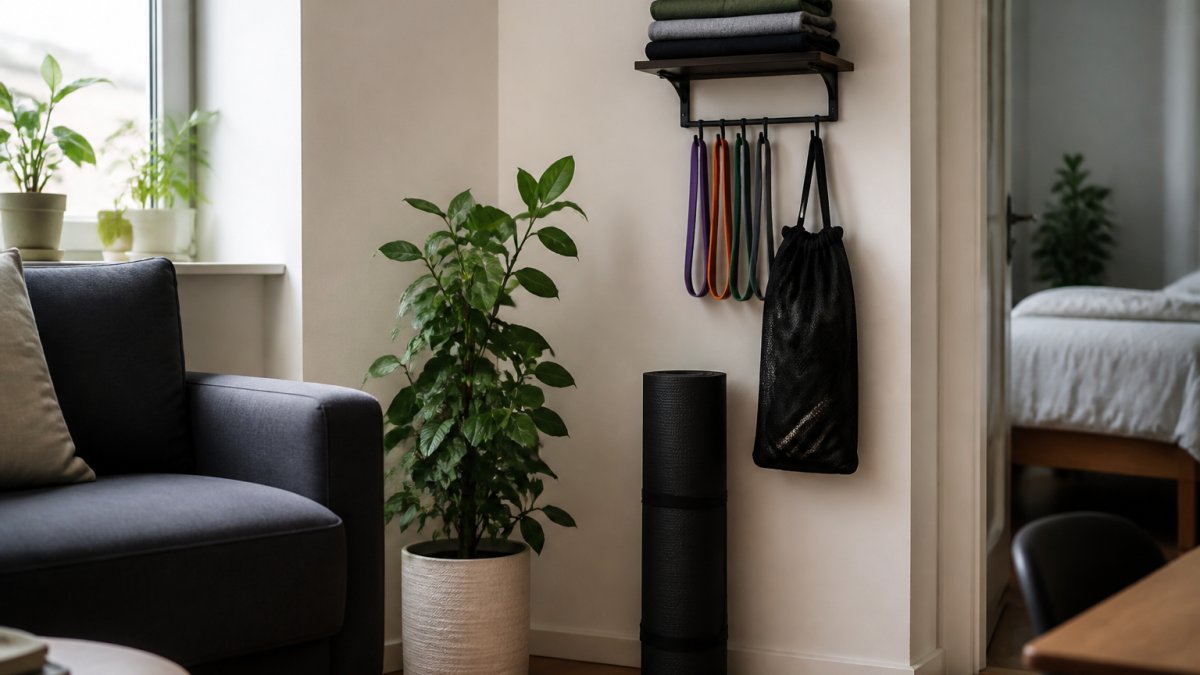
A rollable mat is the easiest win: the Natural Rubber Non-Slip Yoga Mat for Yoga and Meditation measures roughly 64 x 33 cm and stands in a corner. Locate studs before hanging any rack, plasterboard alone will fail.

Gym Weights Storage at Home: Safety and Weight Limits
Gym weights storage at home is a safety question before a tidiness one: keep heavy dumbbells below waist height, spread weight across the shelf, use a load-rated rack, anchor tall units, and leave a clear walkway.
Lighter gear earns its place here: the Elastic String Fitness Resistance Rope 11 Piece Set gives full-body resistance work with almost no stored weight. Our roundup of the best resistance bands for home strength explains how bands replace loaded lifts.
Using Shelves and Bookcases for Gym Gear
Treat each bookcase shelf as a zone: light items on top, dumbbells and kettlebells at chest height, heavier items and the mat below, small pieces in shallow drawers. Put the gear you use most at eye level.
Wall-Mounted Storage and Racks
Wall-mounted storage is the highest-value move in a small flat because it uses space you never walk on. Hang mats over a wide hook, bands on individual hooks, suspension trainers on a rated anchor, and check the fixing first: masonry takes plugs, stud walls need the studs.
Floor Stands and Equipment Racks
A floor stand suits anyone who cannot drill into walls, holding dumbbells, kettlebells and mats in a footprint no wider than a chair. Pick one with a stated weight rating, a footprint under about 60 cm, and a low centre of gravity; mobile carts roll out for training and back into a closet after.
Baskets and Bins for Small Items
Small items make a home gym look messy. Use open bins, not lidded boxes: if you can't see it, you won't use it. Label each by body area or session type.
Making Use of Closet Space
A closet is the best storage room in a small flat because it already has walls, a door, and a floor. Clear one shelf and one hanging section: mats laid flat on top, a gym bag and bands on hooks, a rolling cart on the floor. Keep it ventilated.
Natural Rubber Non-Slip Yoga Mat for Yoga and Meditation →
Storing Workout Clothes and Activewear
Workout clothes organization saves more time than any other storage fix. Never store damp activewear with dry gear: rinse sweaty items, hang to dry, and keep sneakers on a rack, not in a sealed box.
Cleaning, Drying, and Odour Prevention
Moisture is the real enemy of stored gym gear. Build a five-minute post-workout routine: wipe mats and handles, rinse soft bands, hang everything to dry, air the storage area weekly, and wash activewear after every session.
Our Yoga Stretch Band for Flexibility, Stretching and Mobility is polyester cotton, so it dries quickly when hung. The Squat Resistance Band Set for Yoga, Stretching and Fitness comes with its own storage bag, keeping it together and off the floor.


Storage by Equipment Type and Weight
Match the storage to the item and the weight.
| Equipment | Store it | Avoid | Why |
|---|---|---|---|
| Dumbbells and kettlebells | Low rack, waist height or below | High shelves | Safer lifting, less drop risk |
| Yoga mat | Rolled, standing or on a wide hook | Tight folding | Cracks and creases |
| Resistance bands | Hooks or open bin | Tangled drawer | Longer life, easy grab |
Small-Space Storage Plans and Measurements
A plan beats a shopping trip. Sketch your room and mark three zones: training space, storage wall and reset path. Measure wall height, width and usable depth, note where the studs are, list gear by weight heaviest first, and assign each item one home. If a piece of gear has no home, it doesn't get bought.
Choosing Storage by Budget and Installation Needs
Match the solution to what you can install and spend.
| Option | Installation | Best for |
|---|---|---|
| Over-door hooks | None | Renters, quick wins |
| Freestanding floor stand | None | Anyone who cannot drill |
| Wall rail with hooks | Drill and fixings | Owned homes, small walls |
Start with the no-drill options. Add wall storage once you know exactly what you need to hang.
Frequently Asked Questions
How do you store gym weights at home without damaging the floor?
Keep weights off bare floors by placing them on a rack, a floor stand, or a rubber mat. Store heavier dumbbells on the lowest shelf so they are easy to lift and less likely to fall. Check that any shelf or rack you use is rated for the total weight you plan to put on it, and spread heavy items across the base rather than stacking them high. This keeps your gym weights storage at home safe and protects flooring from dents and scratches.
What is the best way to store resistance bands and yoga mats?
Hang resistance bands from a hook or keep them in a storage bag so they do not tangle or stretch out of shape. Roll yoga mats rather than folding them, and stand them upright in a basket or corner to save floor space. The Squat Resistance Band Set from FitGlow Fitness Gear comes with its own storage bag, which makes it easy to keep the band together and out of the way between sessions. Wipe mats and bands down after use and let them dry fully before storing.
How can I keep workout clothes organized and fresh in a small space?
Sort workout clothes into a dedicated drawer or bin so they are separate from everyday wear, and fold them upright so you can see every item at a glance. After training, hang damp activewear to dry before it goes in the laundry basket, because trapping sweat in a closed bin encourages odor. Wash gear separately from heavy towels, and keep clean clothes in a different drawer from used ones. This simple workout clothes organization routine keeps gear ready to grab and reduces buildup of smells.
Your space is small, but your training does not have to shrink with it. FitGlow Fitness Gear builds compact gear for exactly this problem: a rollable natural rubber mat, resistance sets that pack into their own bags, and stretch bands that hang on a single hook. Everything is designed for home use, so your setup takes minutes and your floor stays clear. Get started with FitGlow Fitness Gear and turn any corner into a gym you will actually use.
