

7 Benefits of Using Fascia Stretch Rings for Flexibility
Last Updated: November 7, 2026
Quick Summary
Fascia stretch rings are compact hoops you squeeze, press and hold against the body during stretching and mobility work. They offer two-way resistance, letting you push outward as well as pull inward, and they support controlled stretching at home. A 10-minute routine with three positions covers chest and shoulders, hips and inner thighs, and upper back and posture.
- A ring lets you push outward as well as pull inward during stretching and mobility exercises.
- Ring presses through the chest and upper back can be part of a routine for people who sit for long periods.
- Week one is a good time to build familiarity with the ring: start gently and avoid pushing too hard.
- The 10-minute routine uses three positions, holding each for 2 to 3 minutes.
- Skip the ring if you have an acute injury or a joint that is swollen or hot.
Table of Contents
- 7 Benefits of Using Fascia Stretch Rings for Flexibility
- Fascia Stretching for Beginners: What to Expect in Week One
- Fascia Stretching at Home: A 10-Minute Ring Routine
- Frequently Asked Questions
7 Benefits of Using Fascia Stretch Rings for Flexibility
Fascia stretch rings are compact hoops you squeeze, press and hold against the body during stretching and mobility work.
1. They offer more ways to move. A ring lets you push outward as well as pull inward during stretching and mobility exercises.
2. They support controlled stretching at home. The ring's resistance lets you add a steady, controlled element to your stretches.
3. They suit desk-related mobility work. Ring presses through the chest and upper back can be part of a routine for people who sit for long periods.
6. They fit into mobility routines. Pressing a ring overhead or between the shoulder blades can be included in stretching and flexibility work.
7. They can be used for core-focused exercises. Squeezing the ring can be incorporated into Pilates and core-focused movements.
| Benefit | What the ring does | Best for |
|---|---|---|
| Two-way resistance | Push out and pull in | Shoulders, hips, spine |
| Tension relief | Loads chest and upper back | Desk-related neck tightness |
| Core activation | Bracing during every hold | Functional movement |
The Fascia Stretch Pilates Ring for Yoga & Fitness is the tool we build this routine around.

Fascia Stretching for Beginners: What to Expect in Week One
Week one is a good time to build familiarity with the ring. Start gently and avoid pushing too hard. Fascia stretching involves slow, controlled movements, and it rewards patience. Breathe out as you squeeze.
For the mechanics, our guide on how to use a fascia ring for back flexibility walks through hand placement and pressure.
How often should you use a fascia ring?
Short, regular sessions are a practical way to build a habit. Skip a day if a joint feels irritated rather than tight.
Stretching fascia vs muscle: what is the difference?
Muscle stretching targets the fibres that contract and release, while fascia work targets the connective web around them, which responds to slower, longer holds and light resistance. Most people need both.
Fascia Stretching at Home: A 10-Minute Ring Routine
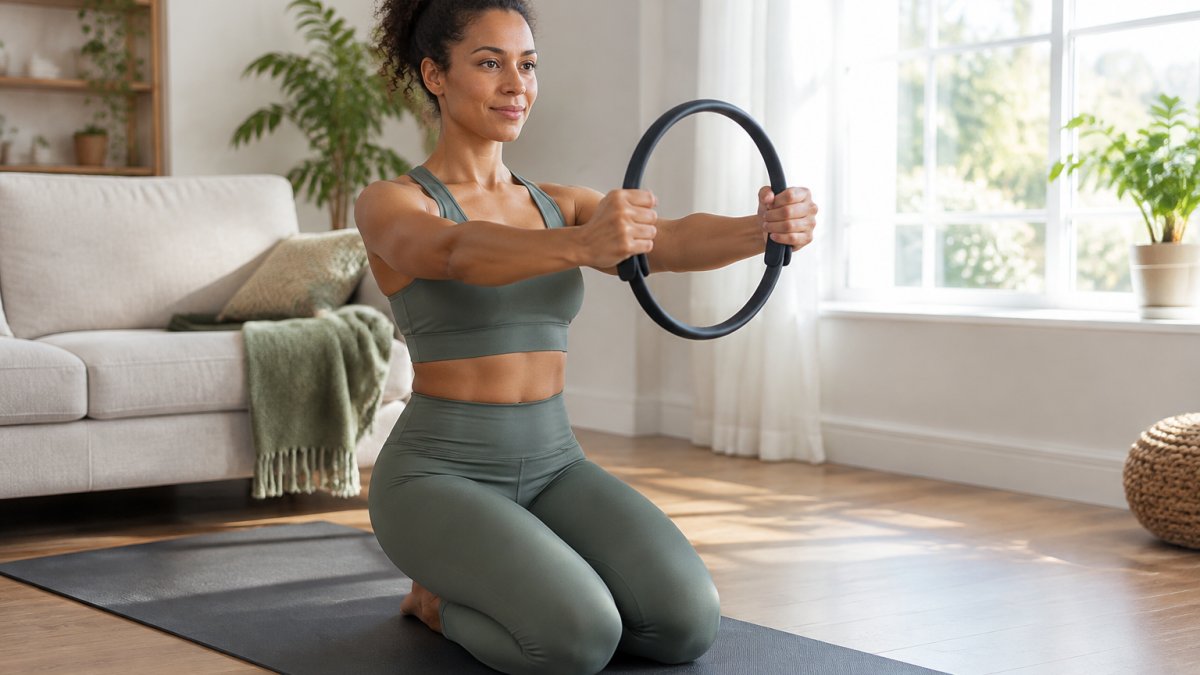
A short routine with three positions. Use a non-slip surface and breathe out on every press.
| Step | Position | Time | Focus |
|---|---|---|---|
| 1 | Ring between palms, arms forward | 2 min | Chest and shoulder opening |
| 2 | Ring between knees, seated or lying | 3 min | Hips and inner thighs |
| 3 | Ring overhead, slow press | 3 min | Upper back and posture |
Perform slow, steady repetitions while maintaining proper posture. The Natural Rubber Non-Slip Yoga Mat for Yoga and Meditation gives you a stable 5mm surface, and our breakdown of what gear actually improves mobility training covers the categories worth owning.

Best for: busy professionals who want a routine they will actually repeat. Skip if: you have an acute injury or a joint that is swollen or hot.
Many people find that a short, simple routine is easier to keep up than a long one. FitGlow Fitness Gear stocks compact gear built for exactly this, including a lightweight TPE ring with a comfortable grip, a non-slip natural rubber mat for floor work, and portable resistance tools you can keep within arm's reach. Get started with FitGlow Fitness Gear and build a mobility habit that fits the day you actually have.
Frequently Asked Questions
How often should you use a fascia ring?
Many people find a few short sessions a week easy to keep up. Start with two or three sessions weekly for the first fortnight to get used to the new pressure. Soreness the next day is a sign to space sessions further apart, not to push harder.
Do fascia stretch rings work for flexibility?
The ring is a tool you can add to your stretching. You can hold it between your hands, knees or ankles to add steady, controlled pressure while you stretch. Pair ring work with regular stretching and mobility drills for the best results from your routine.
When should you avoid using a fascia stretch ring?
Skip the ring, or get clearance from a physiotherapist first, if you have a recent fracture, an acute muscle strain, joint instability, or a diagnosed connective tissue condition. Avoid pressing the ring into areas that are bruised, inflamed or swollen. Stop immediately if you feel sharp pain, numbness or tingling rather than a broad stretch. Pregnant readers and anyone in rehabilitation should follow their clinician's guidance on which positions and pressure levels are appropriate.
Time per position in the 10-minute fascia ring routine
